
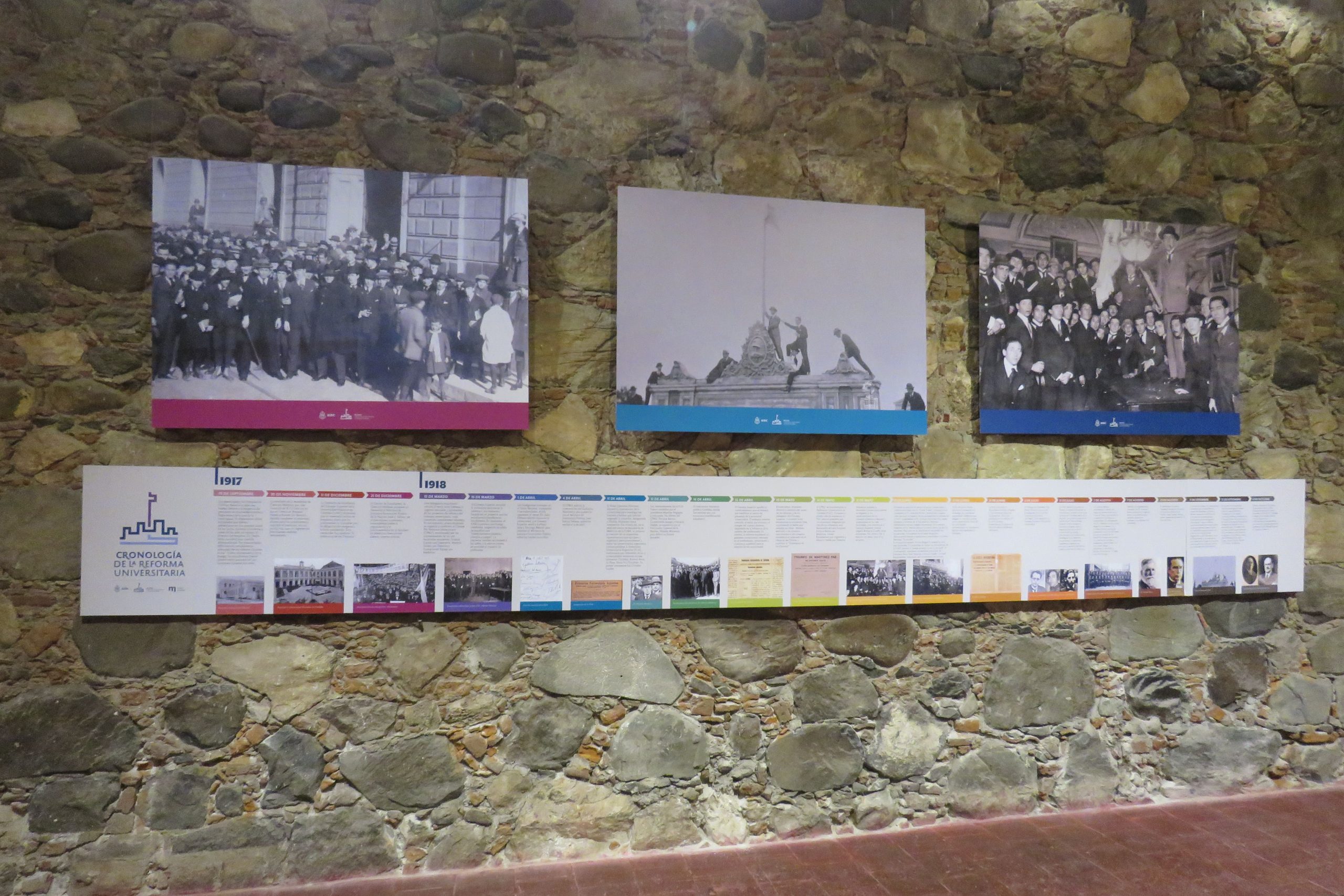
The University Reform of 1918 is one of the most significant events in our history. It
represented a turning point for higher education in Argentina and Latin America.
Originating at the National University of Córdoba, this student revolution challenged the
conservative structures that had ruled for 300 years. It was a movement led by
students and supported by various sectors of society, and it fought for a secular,
scientific, pluralistic, and critical education.
The Reform proposed a university model based on autonomy, democratisation, and
active student participation in university governance. It also advocated for profound
social and cultural changes beyond academic matters.
Following the events of 1918, the reformist movement continued to adapt and
incorporate new demands as the 20th century progressed. The Reform laid the
groundwork for public, tuition-free, and high-quality education, which are principles that
continue to guide our country’s educational institutions to this day.
The next room brings the events of the Reform into the present through diverse period
artefacts and a timeline of the movement’s key milestones. It is the product of a
collaboration between the Historical Museum of the National University of Córdoba and
the University Reform House Museum.
Learn more about the University Reform House Museum at this link
7 – A. Liminal Manifesto
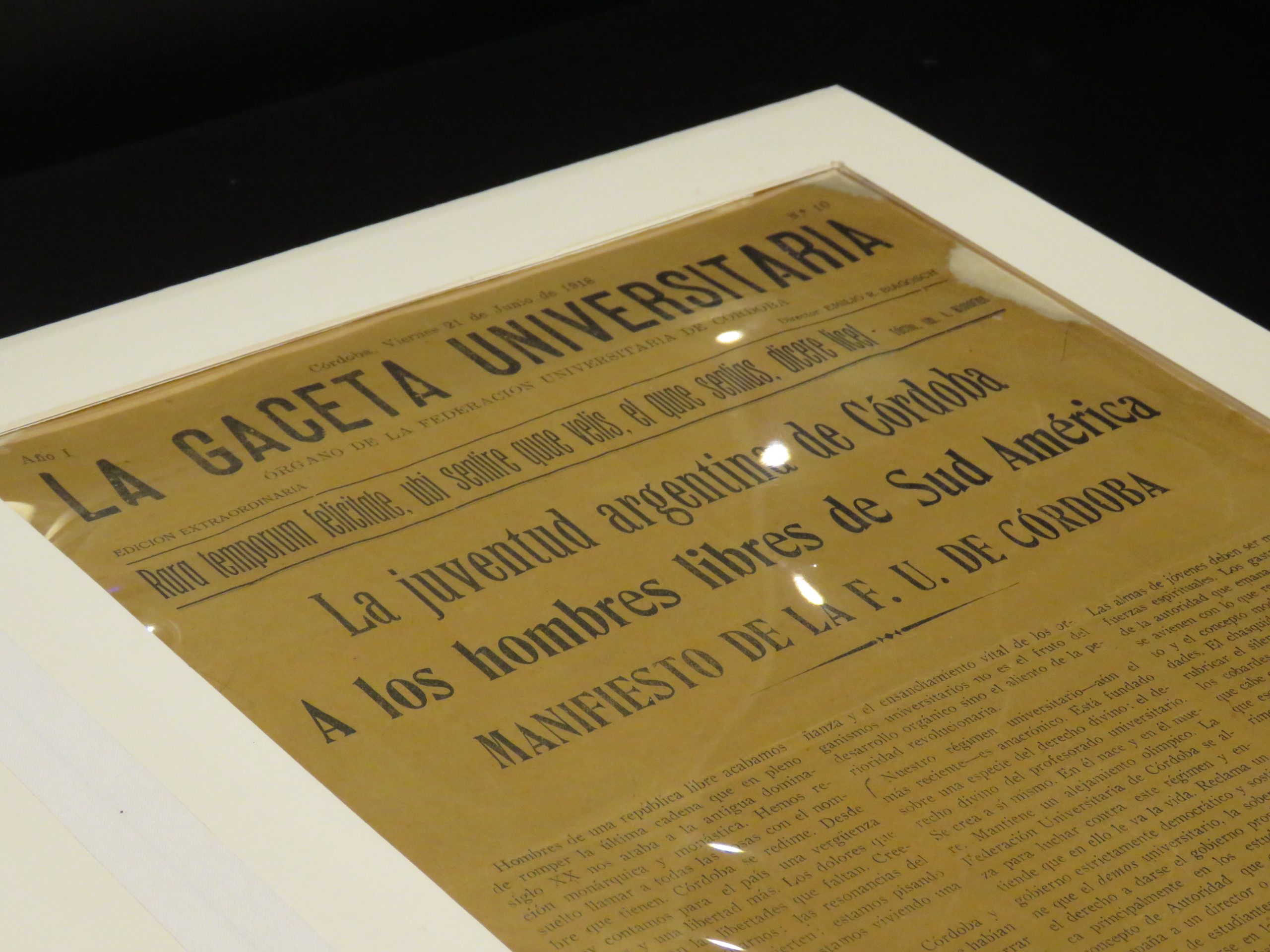
We are in the presence of the most emblematic document of the 1918 University
Reform: the Liminal Manifesto. This proclamation was drafted and signed by students
from the University Federation of Córdoba (FUC) and was published on 21 June 1918
as a special edition in issue No. 10 of the student-led newspaper La Gaceta
Universitaria.
In forceful and visionary language, the Manifesto expresses the central ideas of the
reformist movement and establishes the principles that would guide the transformation
of Argentine universities. The Manifesto was adopted by the FUC as its statement of
principles and became the cornerstone of a new university model based on autonomy,
shared governance, and freedom of thought.
The signatories represented the 3 faculties that comprised the National University of
Córdoba at the time: Law, Medicine, and Engineering.
In recognition of its historical and cultural significance, the Manifesto was inscribed in
UNESCO’s Memory of the World Register for Latin America and the Caribbean in 2018
as part of humanity’s documentary heritage. It is also part of the Cervantes Institute’s
Caja de las Letras in Madrid, a vault that preserves symbolic legacies from prominent
figures in Hispanic culture.
The only known original copy is preserved by our University.
7 – B. Key to the Former Rector’s Office
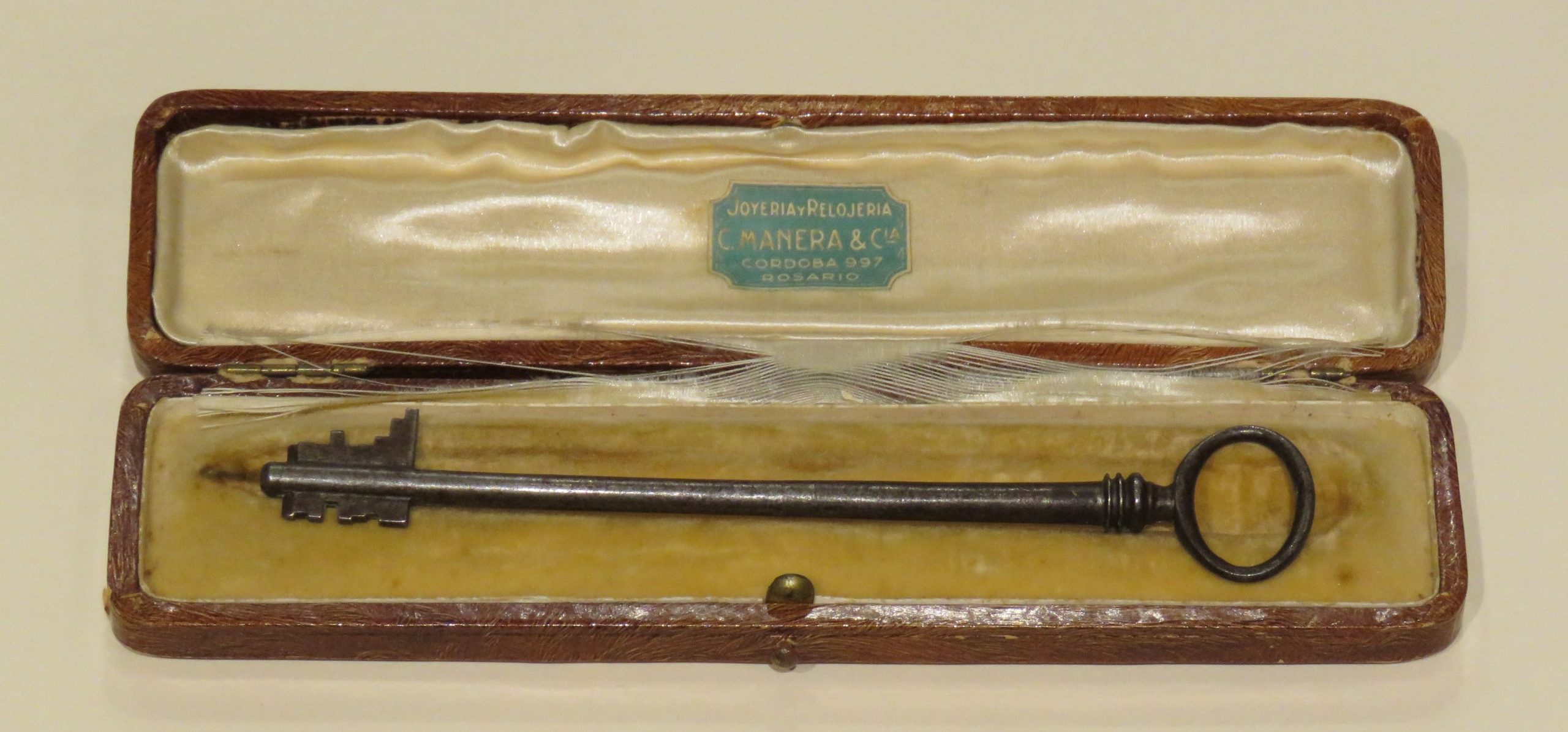
This room displays an artefact rich in symbolism: the old key to this building, which at
the time served as the Rector’s Office of the University. Far from being an ordinary key,
it is a tangible reminder of the 1918 student struggle.
On 9 September of that year, reformist students occupied the building as a form of
protest. One of them, Ismael Bordabehere, came into possession of this key. Since
then, the key has become a symbol of the students’ achievements and of the ideals
that drove this movement: a secular, democratic, and modern university committed to
society.
In 1968, the key was given to the reformist students from Rosario by Bordabehere
himself on the 50th anniversary of the Reform. Years later, in 2008, to celebrate the
90th anniversary, Héctor “Gogo” Arteaga’s family, who owned the key, donated it to the
National University of Córdoba to ensure its preservation and safeguard its legacy.
Today, this key does not open a physical door but rather the living memory of a
movement that forever transformed higher education in Latin America.
7 – C. La Gaceta Universitaria (1918-1919)
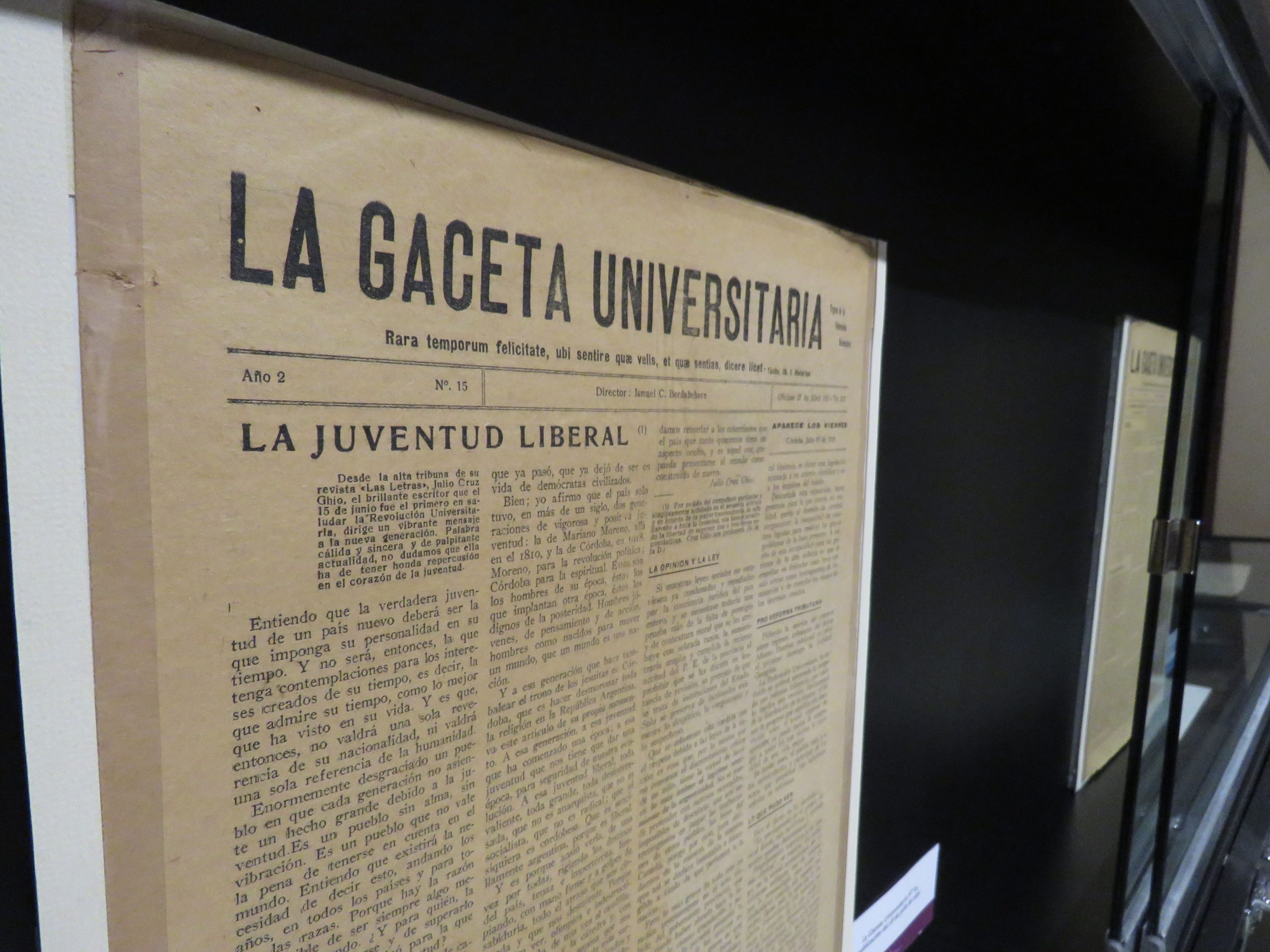
In 1918, at the height of the reformist movement, La Gaceta Universitaria was founded
as the official newspaper of the University Federation of Córdoba. It supported and
publicised the student rebellion that marked the beginning of the University Reform. A
total of 21 issues were published between 1918 and 1919.
Its pages contain the earliest documents and ideas that gave life to this Latin American
movement, which revolutionised universities and public education.
The name of the newspaper was not chosen at random. The University Federation of
Córdoba was inspired by the Gazeta de Buenos Ayres, the historic newspaper founded
in 1810 by Mariano Moreno during the May Revolution. This choice reflected the
Córdoba student movement’s deep identification with the fight for independence and
freedom in Latin America.
To strengthen that bond, La Gaceta Universitaria adopted the same motto that Moreno
used for his newspaper. It is a Latin quote from Tacitus, an ancient Roman politician
and historian, which translates as “It is the rare fortune of these days that one may
think what one likes and say what one thinks”.
This motto summarizes the essence of the Reform: the conquest of freedom of thought
and expression within the university.
** In Room 4 of the Museum, you can see a copy of the Gazeta de Buenos Ayres **
** The entire collection of La Gaceta Universitaria has been digitised. You can access it at this link **
7 – D. Reformist Documentation
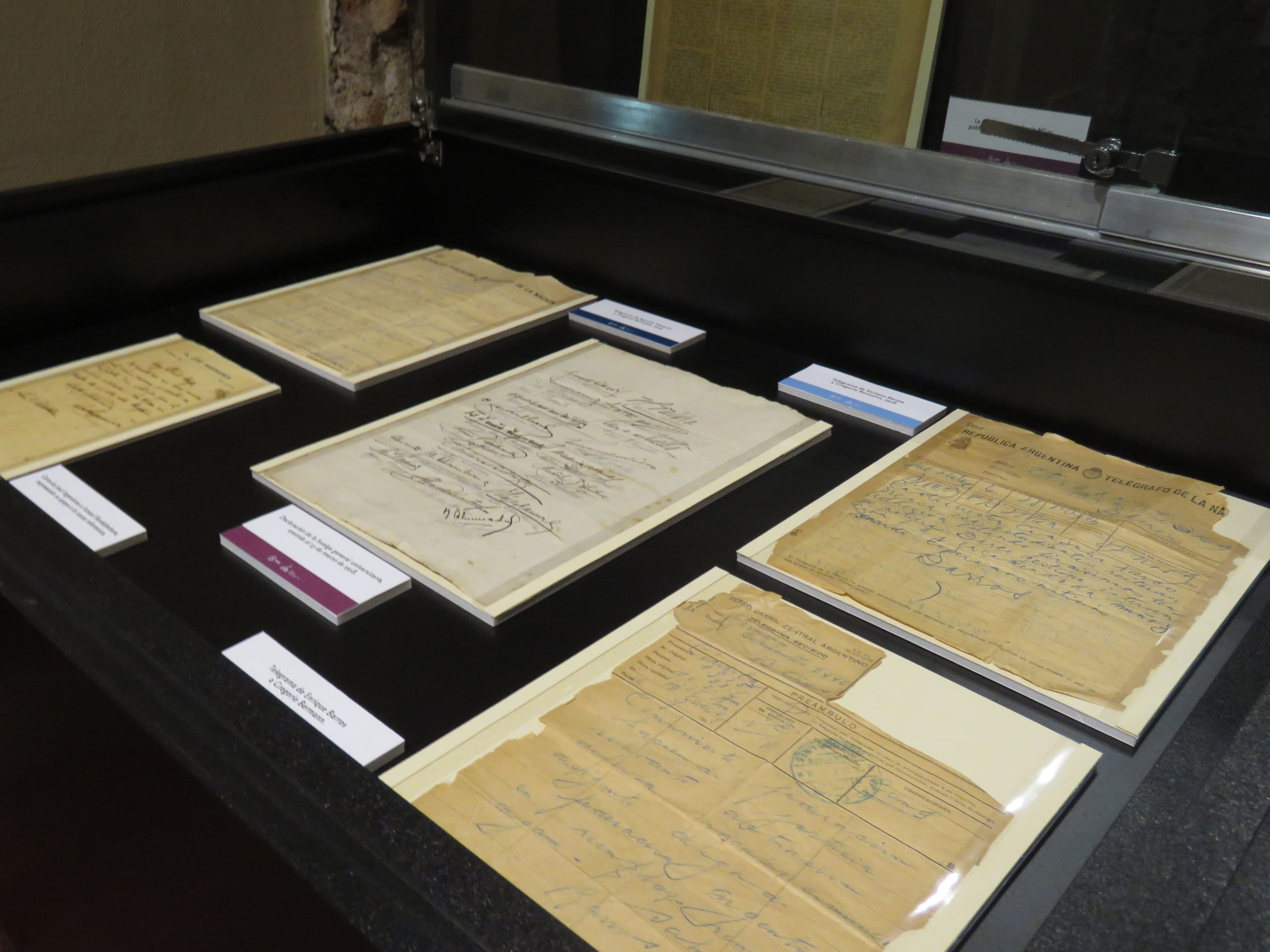
In this room, the Museum preserves a valuable set of historic documents that are part
of the tangible legacy of the University Reform of 1918. Among the most notable items
are the minute book of the Pro-University Reform Committee and the original document declaring the strike, direct witnesses to the key moments of that student achievement.
These records are accompanied by photographs, letters, and telegrams signed by
students and intellectuals who were prominent figures in the reformist movement and
whose ideas and actions contributed to a far-reaching transformation of public
universities.
This documentary collection not only allows us to reconstruct the events but also brings
us closer to the spirit of the young people who fought for a free, modern university
committed to society.